Phoenix · 7th Avenue · Indian School to Camelback
A field guide to Melrose, Phoenix.
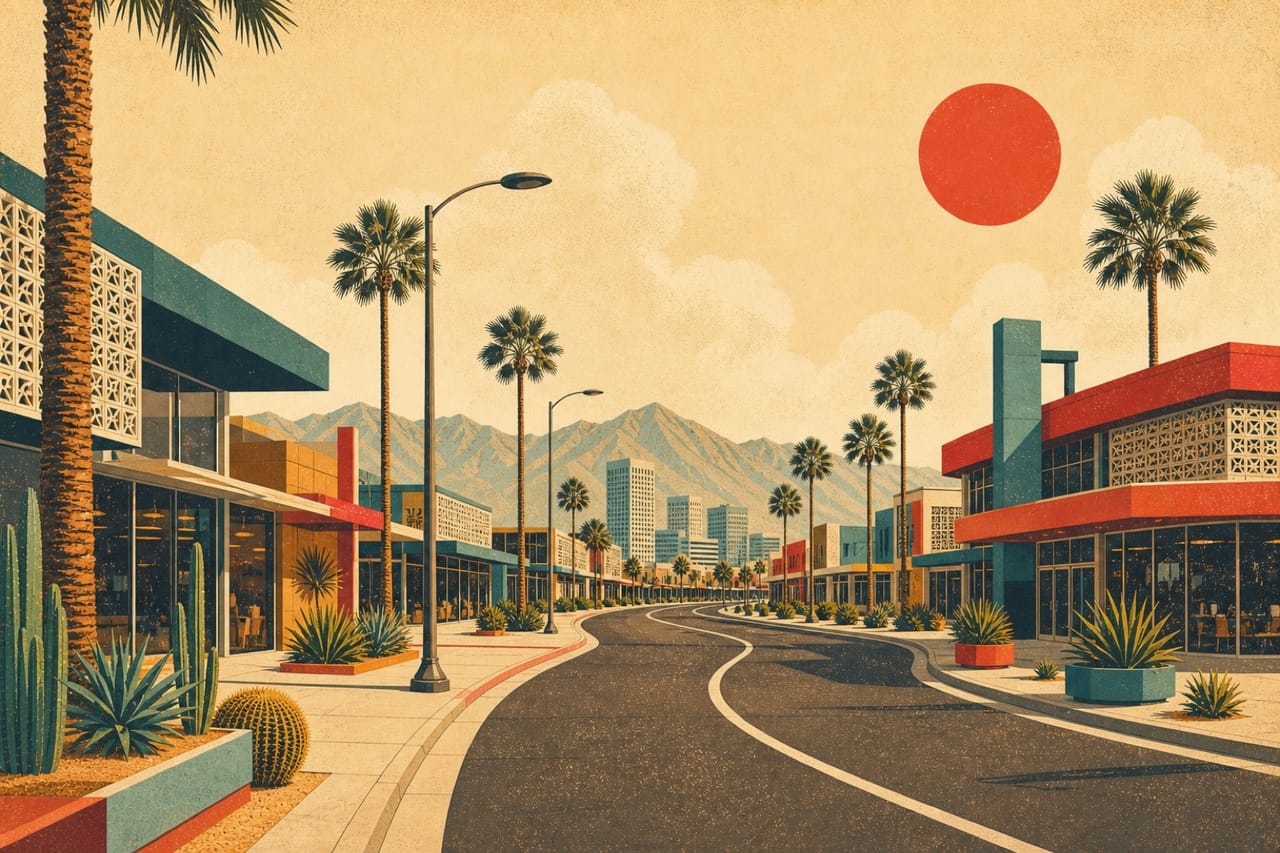
Melrose is the central Phoenix stretch of 7th Avenue where vintage shops, independent businesses, LGBTQ+ nightlife, and nearby residential streets meet.
District notes
The corridor comes first; the block comes next.
Melrose is a commercial corridor, not a single subdivision. Start with 7th Avenue, then check the neighborhood, historic district, and parcel details for the address in question.
For a broad view only. Confirm boundaries, parcels, and historic status for a specific property.
Where it sits
7th Avenue
The core Melrose corridor runs between Indian School Road and Camelback Road in central Phoenix.
What defines it
Local, vintage, inclusive
Antique shops, independent businesses, LGBTQ+ nightlife, and mid-century storefronts give the district its identity.
What buyers notice
Homes with distinct eras
Nearby residential blocks include ranch, mid-century, Spanish revival, and early Phoenix homes with details that shape renovation and value.
How to use this page
Start here, then call Derek
Use the links below to get your bearings, then visit Derek's site for help with a Melrose-area move.
The Curve, vintage retail, and LGBTQ+ Phoenix overlap here. 23
The corridor's slight curve gives Melrose one of its best-known identities. Antique shops, vintage furniture, art, dining, patio cocktails, dancing, LGBTQ+ bars, and allied businesses make the district feel different from the surrounding Phoenix grid.
The district grew from a linear commercial spine, not a subdivision map. 4
Local coverage traces Melrose's late-1990s district designation and describes the area as a patchwork of residential and commercial buildings, including post-war homes and a citywide secondhand-shopping identity.
SAMA is the practical update source. 1
The Seventh Avenue Merchants Association supports merchants, surrounding neighborhoods, local business growth, and district events. For current event details, check SAMA directly instead of relying on dates that can go stale.
Local links
Places to check for current details and background.
These organizations and references cover merchants, visitor information, city services, neighborhoods, and historic districts. Check the original source for changing details.
Merchants
- Visit
Seventh Avenue Merchants Association
SAMA
The merchant association for the 7th Avenue corridor, with district updates and current event information.
Visitor Guide
- Visit
Melrose District Visitor Guide
Visit Phoenix
Guide to The Curve, LGBTQ+ nightlife, vintage shopping, dining, and murals.
City Guide
- Visit
Melrose Local Restaurant Map
City of Phoenix
City map of Melrose dining, independently owned businesses, and Phoenix food destinations.
Neighborhood
- Visit
Grandview Neighborhood
Grandview Neighborhood Association
Neighborhood association information for Grandview's mid-century residential setting and boundaries.
- Visit
Grandview History
Grandview Neighborhood Association
Background on Grandview's 1951 establishment, quiet residential character, and Melrose District relationship.
History
- Visit
Woodlea Historic District PDF
City of Phoenix
Historic-district details for Woodlea, including its period of significance, register status, and review process.
- Visit
Woodlea Historic District
Historic Phoenix Districts
Additional background on Woodlea's residential setting near the Melrose corridor.
- Visit
7th Avenue / Melrose Overview
Downtown Phoenix Journal
Overview of the corridor's late-1990s designation, vintage identity, and Woodlea/Melrose relationship.
Real Estate
- Visit
Google Business Profile
Derek Deardorff
Reviews, directions, and public business profile for Derek's residential real estate practice.
Nearby neighborhoods
Keep the corridor and the residential map separate.
Melrose is useful shorthand, but nearby neighborhoods have their own boundaries, associations, and historic-district status.
- 01
Woodlea 58
Woodlea is a historic residential district tied closely to Melrose corridor life. The City of Phoenix historic district sheet identifies a 1928-1955 period of significance, 166 properties, Phoenix Historic Property Register and National Register listings, and a design-review process for exterior work.
- 02
- 03
Real-estate notes
Questions worth asking before making assumptions about a property.
Read the district and the exact street together before making a property decision.
Historic-district status may shape exterior work. 5
In Woodlea, the City of Phoenix notes historic register status and design review for exterior alterations. That does not make every nearby property historic, but exterior plans should be checked against the city's rules before assumptions are made.
Vintage and mid-century character shape how the area feels. 243
Melrose's secondhand, vintage, mid-century, LGBTQ+, dining, and nightlife identity influences how people experience the area. Pricing still matters, but presentation should explain architecture, condition, and lifestyle fit instead of relying only on price per square foot.
Sources
References for the district notes.
These links back up the district, neighborhood, and real-estate notes on this page.
- 01
Merchant association
Seventh Avenue Merchants Association
Boundary, mission, merchant role, neighborhood support, and current district event updates.
Read source - 02
Visitor guide
Visit Phoenix Melrose District Guide
Visitor guide to The Curve, LGBTQ+ nightlife, antique shops, dining, and mid-century roots.
Read source - 03
City guide
City of Phoenix Eat Local: Melrose
City-backed local-food and business framing for Melrose as a welcoming 7th Avenue district.
Read source - 04
District overview
Downtown Phoenix Journal: 7th Avenue/Melrose
The corridor's late-1990s designation, vintage retail identity, and Woodlea/Melrose relationship.
Read source - 05
Historic preservation
City of Phoenix Woodlea Historic District PDF
Preferred source for Woodlea's period of significance, property count, register listings, and design-review note.
Read source - 06
Neighborhood association
Grandview Neighborhood
Grandview boundaries, 1951 establishment, neighborhood culture, and mid-century positioning.
Read source - 07
Neighborhood association
Grandview About
Additional details on Grandview and its 1951 establishment.
Read source - 08
Historic district overview
Historic Phoenix Districts: Woodlea
Supplemental neighborhood overview; City of Phoenix remains the preferred source for formal historic facts.
Read source
Connect
Talk with Derek about a Melrose-area property.
For a real-estate question, licensing disclosures, or a conversation about a specific home, visit Derek Deardorff's main site.